
On Thursday, Google launched the Google Body Browser, said to be a Google Earth-like experience for the human body.
Google Body Browser
Unfortunately, PCMag.com could not get the new application to work, a problem shared by at least one other commenter on the page. Google published the Body Browser as an in-browser tool.
"Body Browser is a detailed 3D model of the human body," Google said in an introduction. "You can peel back anatomical layers, zoom in, and navigate to parts that interest you. Click to identify anatomy, or search for muscles, organs, bones and more."
The Body Browser requires a browser, such as the beta version of Chrome, with WebGL. WebGL, a 3D graphics API that can be run directly within the browser, was implemented in theChrome beta that was launched earlier this week.
Like the Google Sky Map for Android, users can search for individual organs, or "peel back" and expose different systems, such as the skeleton and internal organs. The 3D model, which is female, can also be rotated and zoomed in and out.
Unfortunately, the page simply displayed the female model, but refused to allow it to be rotated or manipulated when PCMag.com tried it - possibly an issue tied to a hardware configuration, or an indication that Google needs to tweak its own technology. Users will have to download the beta version of Chrome, which will put them on the beta track for updates; PCMag.com did so.
However, two users on Google's comments page also noted problems that prevented the page from loading.
"Can't load page using 9.0.597.19 beta. Get the "Aw Snap" page after load attempt," "Pondopholous" wrote.

LG announced the world’s first dual core mobile phone which is being called the Optimus 2x. The much awaited phone has a nVidia Tegra 2 chip at its core. The presence of a dual core processor guarantees a much better web browsing and multitasking experience, claims LG. As for now, this is the world’s first smartphone having a dual core processor. Tegra 2 also has a low power consuming GPU, having the first 1080p video processor, which is claimed to make web browsing twice as fast and gaming five times as fast. The phone is a direct competitor to the Samsung Galaxy S and a comparison video shows the humiliation of the Galaxy S when pitted against the Optimus 2x.
The Optimus 2x boasts of 1080p HD video recording. In addition to this it also supports HDMI mirroring. This feature will allow you to duplicate whatever the phone’s 4-inch WVGA screen is displaying on an external screen in full HD quality. This feature also supports the streaming of games making the Optimus 2x an attractive gaming device. It will be able to connect wirelessly to an external compatible screen. Other features include a 8 megapixel camera at the back. It is also suited for video chatting with a 1.3 megapixel camera in the front. Similar to the iPhone, the phone has an accelerometer and gyro sensor for extremely precise motion sensing. It has 8 GB on board memory and supports an external memory card of up to 32 GB. On the software front, the phone comes with Android 2.2(Froyo) and is eligible for an upgrade to Android 2.3(Gingerbread). The phone comes across as a dynamic multimedia package with excellent hardware specs and Android to go with it. It will be available in South Korea in the next month followed by release in Europe and Asia.
In related news, rumors of a dual core HTC smart phone dubbed ‘Scorpion’ surfaced. The phone is rumored to have a 1.5 Ghz processor and Android 2.2. HTC spokesperson denied the existence of any phone by that name.
The Optimus 2x is one of the many dual core phones coming this year. Though it has been the first phone to be announced, we can expect a plethora of different dual core phones coming this year. Battery consumption of such a phone remains a concern and we will have to wait and see how they performs.

The 15mm z-height, 7200-rpm Constellation.2 was designed for system builders and OEMs to implement in a variety of applications in Direct Attached Storage, Network Attached Storage, and Storage Area Network environments. Seagate claims that the Constellation.2 can attain sequential and random read speeds of up to 115 Mbps of maximum sustained throughput in multiple-drive systems.
Seagate also says that the Constellation.2's operating power is under 6.4 watts, with enhanced PowerChoice options that can incorporate additional power savings up to 54 percent (as low as 1.1 watt, per a data sheet for the drive) during slow or idle periods. The drives' temperature is kept low through the use of Workload Management technology.
The Constellation.2 is available in capacities ranging from 250GB to 1TB, with 6-Gbps SATA or 6-Gbps SAS interfaces, and with a government-grade Self-Encrypting Drive option that maintains data security through the full life of the drive. In addition to these features, the Constellation.2 also implements the new T10 Protection Information standard as well as increase in reliability to 1.4 million hours mean time between failures. Seagate also estimates the drive's annualized failure rate at 0.62 percent, and says that represents the industry's highest level of reliability for a 24x7 nearline drive.
According to Seagate, Constellation.2 drives come with a five-year warranty and are now shipping to OEMs such as Dell, and the worldwide distribution channel.
Copyright © 2010 Ziff Davis Publishing Holdings Inc.


• Resolves an issue where iTunes may unexpectedly quit when deleting a playlist that has the iTunes Sidebar showing.
• Fixes a problem where iTunes may unexpectedly quit when connecting an iPod to a Mac equipped with a PowerPC processor.
• Addresses an issue where some music videos may not sync to an iPod, iPhone, or iPad.
iTunes 10.1 came with several new features and improvements, including:
• Use AirPlay to instantly and wirelessly stream videos from iTunes to the all-new Apple TV.
• Sync with your iPhone, iPad, or iPod touch with iOS 4.2.
• Provides a number of important stability and performance improvements.
iTunes 10.1.1 is avaialble vai Software Update and also via standalone installer.
More info and download link:
• iTunes 10.1.1 - 90.50 MB (Mac), 78.08 MB (Win 32), 78.98 MB (Win 64)

As you can expect with the newer architecture, the GTX 570 offers better performance at lower heat (using the 580’s vapour-cooling system) and power consumption, apart from offering more choice at the top-end of the market.
The card also apparently offers great overclocking headroom, and some factory overclocked versions offer 810MHz core clock and 1620MHz shader clock and 3960MHz memory clock speeds out of the box.
The DX11 GeForce GTX 570 is interestingly positioned in terms of hardware, falling in between the GTX 480 and GTX 480, though it has the GF110’s more efficient design. See how it fits below:
Model | GTX 580 | GTX 570 | GTX 480 | GTX 470 |
Stream Processors | 512 | 480 | 480 | 448 |
Texture Address / Filtering | 64/64 | 60/60 | 60/60 | 56/56 |
ROPs | 48 | 40 | 48 | 40 |
Core Clock | 772MHz | 732MHz | 700MHz | 607MHz |
Shader Clock | 1544MHz | 1464MHz | 1401MHz | 1215MHz |
Memory Clock | 1002MHz (4008MHz data rate) GDDR5 | 950MHz (3800MHz data rate) GDDR5 | 924MHz (3696MHz data rate) GDDR5 | 837MHz (3348MHz data rate) GDDR5 |
Memory Bus Width | 384-bit | 320-bit | 384-bit | 320-bit |
Frame Buffer | 1.5GB | 1.25GB | 1.5GB | 1.25GB |
FP64 | 1/8 FP32 | 1/8 FP32 | 1/8 FP32 | 1/8 FP32 |
Transistor Count | 3B | 3B | 3B | 3B |
Manufacturing Process | TSMC 40nm | TSMC 40nm | TSMC 40nm | TSMC 40nm |
Price Point | $499 | $349 | ~$400 | ~$240 |
So, if you were excited about Nvidia’s new top-end performance, but didn’t have the heart to spend on the GTX 580 or settle for the GTX 480, here’s the GTX 570. Keep your fingers crossed, and maybe you’ll get a GTX 565 soon.
Over at the red side of Christmas, December 15th is said to be the new rumoured date for the launch of the Cayman Pro - HD 6950 and Cayman XT - HD 6970 single-GPU cards, and the world is certainly holding its breath till then. The HD 6970 has a rumoured price of $450, which pegs it at a great deal less than the GTX 580.

"For now, touchscreen tablets appear to be luring consumers away from netbooks but analysts believe in the long term, netbooks will hold their own in an increasingly fragmented mobile device market, particularly as computer makers address user complaints by enhancing netbooks with faster processors and new capabilities," Bertolucci reports.
"Netbook shipments in the US fell 34 percent from the third quarter of 2009 to the same period in 2010, according to research firm Gartner. The likely culprit? A certain tablet from Apple comes to mind," Bertolucci reports. ""
Full article here.


The presence of advanced laser technology at the bottom of the mouse, allows its operation on any type of surface with superior tracking & higher precision than the regular optical mice. With a single click of the OptoWheel known as “the Blue eye”, one can easily scan through the documents or skip webpages at the wink of an eye. At the same time, one can stop the scrolling function with the second click of the OptoWheel.
With such unique and innovative features, which are well complemented by a stylish design, the Traveler 355 Laser makes a strong selling statement for a normal PC user, as well as a hard-core gamer - who looks for something sophisticated for that killer edge in the modern FPS games! If you were wondering about the most important factor - price, that could seal your buying decision, then you would be overwhelmed to know that it is rather affordably priced at Rs. 645. We would love to get one here for a test drive to ourselves!

The 8GB and 4GB aXeRAM DDR3-2000 dual-channel memory kits complete Transcend’s high-performance RAM portfolio in India, alongside the 6GB DDR3-2000 triple-channel kit, and the ultra-fast 4GB DDR3-2400 dual channel kit, which are all certified for use on Intel P55 or X58-based motherboards.
TX2000KLN-8GK - 8GB - Rs. 12,870
TX2000KLU-6GK - 6GB - Rs. 11,110
TX2000KLU-4GK - 4GB - Rs. 7,430
TX2400KLU-4GK - 4GB - Rs. 8,580
"The iPad lists at FNAC and other Brazilian stores for $985, almost twice as much as in the U.S. and one of the highest official prices for an iPad anywhere, according to Macworld Brazil, a Brazilian newsletter run by U.S.-based International Data Group," Lucia Kassai and Cecilia Tornaghi report for Bloomberg.
"The iPad is one example of the many price distortions caused by Brazil's elaborate industrial policy," Kassai and Tornaghi report. "Companies that don't manufacture goods in Brazil have to pay stiff tariffs if they want to sell to the nation's consumers. Brazil levies a 60 percent tax on the iPad and as much as 90 percent on imported cars. A blouse that retails for $49.50 at The Gap in the U.S. goes for $82 in Brazil at non-Gap outlets. 'Brazilians sometimes pay luxury-good prices for second-rate items,' says tax specialist André Mendes Moreira, who writes a widely read financial column and tracks the impact of import taxes on everything from cars to champagne. 'The consumer is at a clear disadvantage.'"
Kassai and Tornaghi report, "Brazil imposes these stiff taxes on imports to promote local industry and encourage foreign manufacturers to set up factories inside the country. Samsung Electronics, for example, has been manufacturing locally since 1986. It now makes the Galaxy Tab, its answer to the iPad, at one of its Brazilian plants. In contrast to Samsung, Apple is a holdout. In March, Brazilian media reported that Chief Executive Officer Steve Jobs was asked by the city of Rio de Janeiro to set up the country's first Apple Store in time for the 2020 Olympics. Jobs refused, citing the superhigh taxation of important electronics."
Read more in the full article here.

Ubuntu is most popularly available as a live installable CD in both 32-bit and 64-bit versions. If you want a more configurable installer, you can download the alternate CD that includes more applications and a text-based installer. There is also the DVD version that bundles a larger number of applications with it. For Windows users there is "Wubi" a Windows application that can install Ubuntu on the free space in a Windows partition while Windows it running. We used a 64-bit standard desktop live CD.
When you boot from the live CD, it gives you the option to either test Ubuntu, or simply begin the install process. Even if you fully intend to install Ubuntu, we recommend that you choose to try it instead. You can then launch the installer from the live Ubuntu instance. The advantage in doing so is that you will have a functional Linux desktop up and running while the installation is going on. You can check your mail, listen to music, watch YouTube videos, or play games while the installation goes on in the background.
To-do list apps are a dime a dozen, but most of them over do it with complicated interfaces. You end up spending more time organizing your tasks than actually getting things done. A new app called Dropkick aims to change all of that. Its simple interface focuses on the essentials, leaving out all the distractions. The result is a to-do list that finally just might help you get things done.
Dropkick works great on either iPhone or Mac as a standalone, but it really shines when synced together. Syncing happens securely over the internet so you can easily add tasks at your desk and pick up where you left off on-the-go.
Dropkick is available as a free trial from dropkickapp.com. Upgrading to the full version is a $1.99 in-app purchase for the iPhone version and $4.99 for the Mac version. The application is compatible with iOS 3.0 or later and Macs running OS X 10.5 or 10.6.
The companies did not disclose financial terms of the deal that brought the Texas-based startup behind the hot "Games With Friends" franchise into Zynga's stable of studios.
"The 'Games With Friends' franchise is the best social game experience available on mobile today and we are excited to welcome the Newtoy team to the Zynga family," said Zynga founder and chief executive Mark Pincus.
Newtoy titles include "Words With Friends" and "Chess With Friends" games played between people using mobile gadgets and text messages.
Newtoy co-founder Paul Bettner will manage the operation, renamed "Zynga With Friends," and answer to Zynga senior vice president of mobile David Ko.
The acquisition is part of a Zynga strategy to expand its popularity from online social networks visited at desktop computers to the booming smart gadget market.
More than 215 million people play Zynga games such as "FarmVille" and Mafia Wars" monthly, according to Ko.
"We want to offer those users the ability to play those games anywhere," Ko said in a conference call with reporters. "Our users are asking for it."
The Newtoy purchase marks the seventh acquisition by San Francisco-based Zynga in about as many months.
"We're reinventing the way people are social on their mobile devices," said Bettner.
"The Zynga With Friends Studio will build on the Newtoy legacy of creating approachable, highly social games that are accessible to anyone from anywhere."
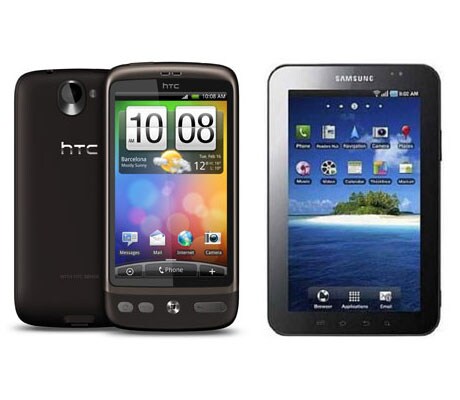
Next year, the research firm says in a report published Thursday, there will be 330 million smartphones sold worldwide and 42 million media tablets. Tablet sales are expected to more than double next year, and to keep climbing, breezing by netbooks, the phenomenon of two years ago, said Frank Gens, chief analyst for IDC.
The PC-centric era is over, the IDC report says. Within 18 months, it forecasts, non-PC devices capable of running software applications will outsell PCs. In tablets, IDC adds, Apple s iPad will remain the leader, but lower-cost tablets will begin making inroads, especially as demand for tablets really takes off in emerging markets.
IDC uses a hardware-centered definition of technology eras devices that open up computing to large new groups of users. So, by its definition, the first era began in the 1960s, when many people got access to computers, seated at mainframe terminals. Next came personal computers in the 1980s, and mobile devices that are full-fledged computers were next.
Mainstream adoption, according to IDC, is when a technology moves well beyond 15 percent or so of the market. In 2011, for example, IDC predicts half of the 2.1 billion people who regularly use the Internet will do so using non-PC devices.
Other technologies, IDC says, are going mainstream as well, notably the business use of cloud computing applications and services accessed remotely over the Internet. The trend is already under way, and all the major technology companies are marketing their cloud-computing offerings relentlessly even though crisply defined cloud strategies seem scarce.
But 2011, Mr. Gens said, is a crucial year for technology companies to get their cloud strategies in place. So-called public clouds shared by a wide range of users, whether consumers or companies will be the dominant technology platform for the next 20 years, Mr. Gens said.
In the corporate market, Microsoft, salesforce.com, Google, I.B.M., Oracle and others are vying to supply cloud applications to businesses. These public cloud marketplaces will be the next generation of enterprise software, Mr. Gens said.
Indeed, 80 percent of new software offerings will be available as cloud services in 2011, according to IDC.
Micromax has released the Andro A60 for Rs. 6,999, and you can expect it to hit major retail stores over the next few days. Official specifications remain much the same, and we're pretty sure that its present price will make it hot item off the shelves.

Display: 2.8-inch resistive touchscreen
Camera: 3.2MP camera AF
3G: HSDPA 7.2Mbps / HSUPA 5.76Mbps
OS: Android 2.1 (Éclair)
CPU: 600MHz microprocessor
Connectivity: WiFi, GPS, Bluetooth, FM radio
Weight: 105 gms
Dimensions: 106.8mm x 59.2mm x 14.0mm
Storage: 150MB internal, expandable up to 32GB (microSD)
Battery: 1280 mAh
click here for original post
It's been a tumultuous year for IT shops, with paradigms shifting like tectonic plates in San Andreas. You might think the IT world would begin to stabilize a bit, at least conceptually, as we launch into the year-end consumer feeding frenzy.

Depending on whom you follow, Google's long-anticipated Chrome OS could make its debut in the next couple of weeks, or the next couple of months. In mid-November, at the Web 2.0 Summit, Google CEO Eric Schmidt said Chrome OS would hit "in the next few months." A week later, Chrome OS head honcho Sundar Pichai was quoted in the New York Times, saying Google would launch a lightweight netbook with Chrome OS by the end of the year.
Although few heads will turn at the sight of a Chrome OS netbook -- we're not talking iPad 2 here -- the technology involved represents a radical departure from anything IT shops have seen in many years.
If you were around the computer industry 10 or 15 years ago, you may recall Larry Ellison's infatuation with the concept of a thin client: a minimalist chunk of hardware that sits on a desk, inextricably tethered to a server. The server provides all of the brains and most of the storage; the thin client only exists to interact with the server.
I tend to think of Chrome OS as implementing a gaunt client -- thin to the point of cadaverous -- tethered to the Web. No desktop applications. No backup programs. No UI tweaks. No tuning. No utilities. Just the Web, the browser, and the Web, and the browser.
More than a year ago, Google posted a YouTube video that explains Chrome OS's charm: Your netbook runs the browser, and that's it -- simple, fast, no layers of overhead, no dark corners for malware, just the browser on metal. More than that, Chrome OS doesn't store any of your data or settings on the computer -- it's all in the cloud. You can flit from one netbook to another and absolutely everything travels with you. If your netbook breaks down, pick up another one. Somebody steals it, who cares? If you're interrupted in the middle of doing something, you can pick right up where you left off by using any other Chrome OS device.

At the same time, Google released Chrome OS's source code, called the Chromium OS Project. Developers have been hacking away at it for a year. Chrome OS is from Google, and it's focused on hardware specifically built to Google's specifications. Chromium OS may run on many different boxes.
That was a year ago. Since then, we've heard very little from the Chrome OS team -- remarkable because it appears as if Dell, HP, Lenovo, Acer, Asus, Toshiba, and other hardware manufacturers are actively bulding machines using Chrome OS. Since then the world's changed, leading to much speculation about how Chrome OS may (or may not!) have adapted to the meteoric rise of the iPad and Google's own Android. By many accounts, netbook sales are hurting, with the iPad rushing in where Windows-based PCs feared to tread.
So how, you may ask, is Chrome OS different from Android? They were developed by two entirely different teams, working from diametrically opposed starting points. As Eric Schmidt said during his Web 2.0 presentation, Android is designed for touch devices and Chrome OS is designed for keyboard devices. Of course, that immediately begs the question of which operating system is intended for use on phones with keypads or slates with touchscreens -- a distinction that will certainly fade in the next year or two.
I wonder if Schmidt ever dreamed he would face a situation where two of his open source products will fight each other for market share. It seems inevitable, at this point.
We may have already seen a telltale sign of Chrome OS adoption. Net MarketShare reports a big jump in Chrome browser usage, from 8.47 percent in October to 9.27 percent in November, stealing business primarily from Internet Explorer. Is it possible that part of that big uptick came from Chrome OS testers? In a similar vein, is the Chrome browser buzz likely to spill over to Chrome OS?
This much is clear. Google's aiming for the enterprise. That New York Times article says Google's VP for Chrome Engineering, Linus Upson, claimed 60 percent of businesses could immediately replace their Windows machines with Chrome OS. Of course, that's ridiculous (and I have to wonder out loud if Upson was quoted correctly). But just as Larry Ellison was shooting at Microsoft's corporate accounts with his thin clients, so too is Google aiming at Microsoft with its gaunt client.
The crazy thing is, it just might work.
This article, "Chrome OS: A pre-release primer," was originally published at InfoWorld.com. Get the first word on what the important tech news really means with the InfoWorld Tech Watch blog.
Hi guys i welcome you all. Thanks for visiting this website.
Visit this website regularly for updates on latest technology
news, mobile and computer tips, tricks etc..


